
Birding in Costa Rica: Habitats, Quetzals and What to Expect
I went birding in Costa Rica with one bird firmly at the top of my list: the Resplendent Quetzal. I had missed it on an earlier trip to Central America, and six years later, that unfinished business was still with me.
But a trip built around one bird can teach you something useful. While you are waiting for the encounter you imagined, there is an entire country asking for your attention.
For me, that meant tanagers outside the lodge, hummingbirds around mountain feeders, two owls above a playground and sloths that were considerably harder to spot than expected.
The real appeal of birding in Costa Rica is the change of habitat. Rainforest, cloud forest, highlands and coastal environments offer different birds and different ways of finding them. Here is what I would keep in mind when planning a trip, especially if a quetzal is part of the dream.
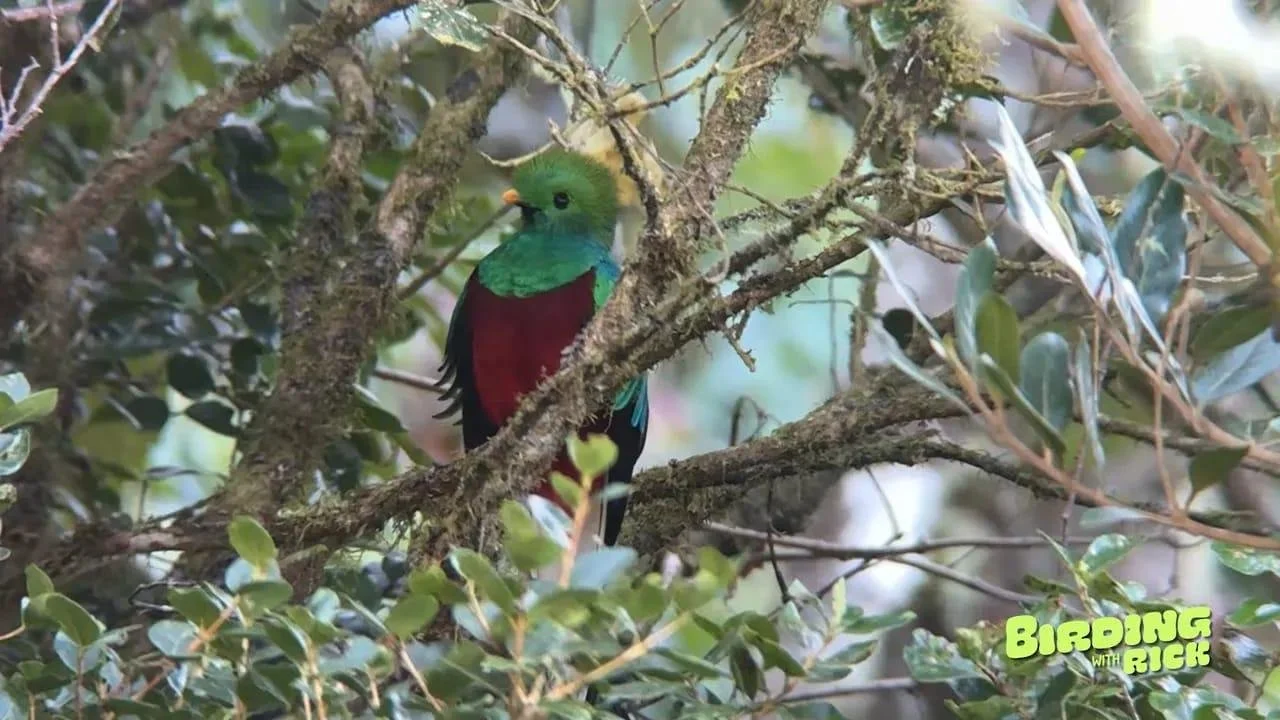
Plan Around Habitats, Not Just a Bird List
Costa Rica birdwatching becomes much more interesting when you stop treating the country as a single destination. Moving uphill changes the landscape, the birdlife and the demands of the day.
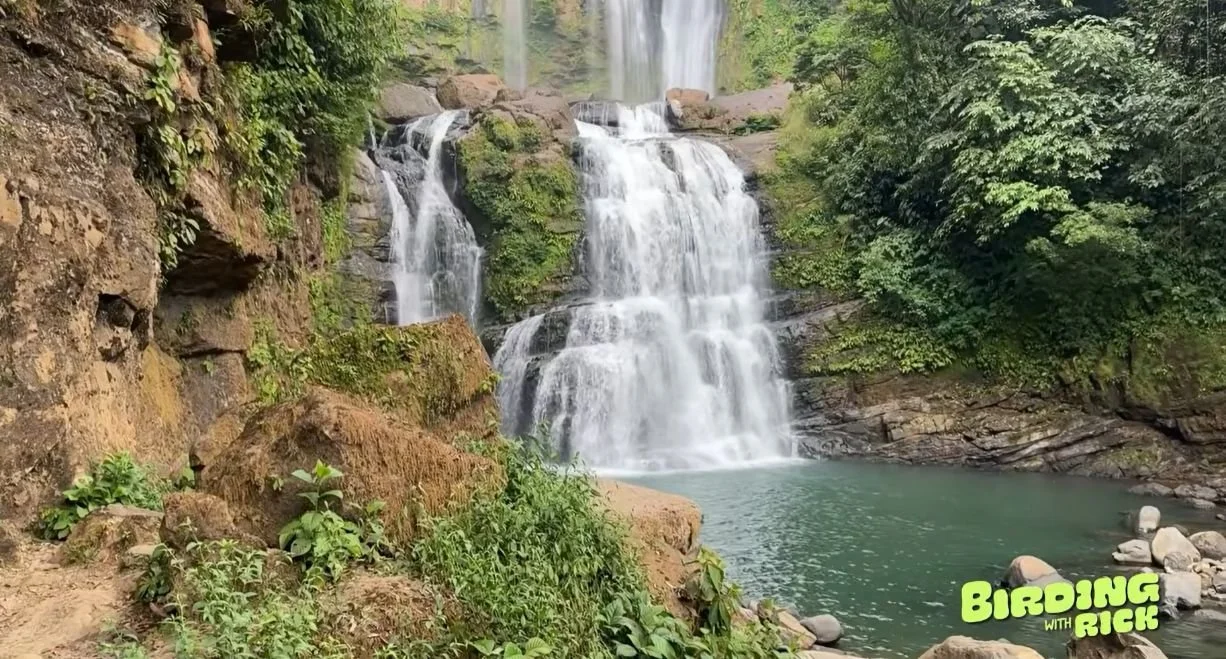
Rainforest and Caribbean Foothills
At El Copal, a community-run wildlife refuge on the Caribbean slope of the Talamanca Mountains, we had both forest trails and a veranda overlooking bird activity. That combination mattered. We could work through dense vegetation, then return to the lodge without putting the binoculars away.
Our morning produced more than 80 species. Tanagers, toucans and hummingbirds were a big part of the experience, including the Snowcap, a tiny hummingbird whose white crown stands out against its wine-colored body.
That was our morning, not a number to expect or a quota to chase. The useful lesson is that trails and lodge grounds complement each other. Neither needs to replace the other.
Cloud Forest and Highlands
Higher up, we encountered White-throated Mountain-gems, Talamanca Hummingbirds and Volcano Hummingbirds. American Dippers and Acorn Woodpeckers were a surprise for someone accustomed to seeing those birds farther north.
Above the cloud forest, the search shifted again. Volcano Junco, Timberline Wren and Large-footed Finch were among the high-elevation birds we looked for. Wind, fog and steep walking made this a very different experience from sitting on a veranda with coffee.
Pacific Coast and Mangroves
A broader route can also include the Pacific Coast and mangrove waterways. Our stop at Manuel Antonio brought a wildlife-focused break before the climb into the mountains. Coastal forest and boat-based mangrove birding add environments that a highland-only trip would miss.
Before choosing bases, compare recent reports in eBird’s Costa Rica records. Look at individual locations rather than assuming that every species recorded in the country is possible everywhere.
Finding a Resplendent Quetzal Takes More Than Arriving
The quetzal may be the bird that brings you to Costa Rica. It is not necessarily the bird that will make itself easy to see.
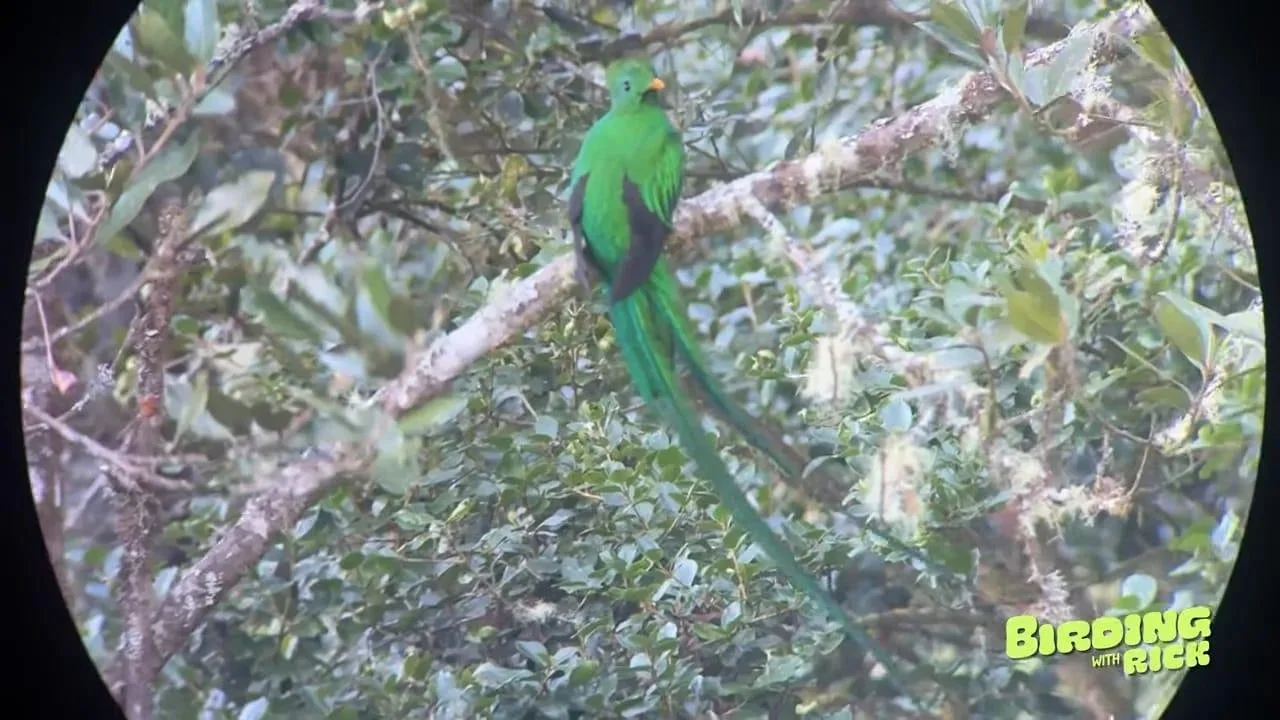
We reached the highlands around Los Quetzales National Park, then began our focused search early the following morning. A local specialist explained why our chosen area was promising: recent activity, wild avocado trees providing food, and calling males at the beginning of nesting time.
Those are more useful clues than simply standing beside a sign with a quetzal painted on it.
Use current information. Ask where birds have been active recently, not just where they have appeared historically.
Understand the food source. Our search concentrated on an area with wild avocado trees.
Start early. We were up at 5 a.m. for the search.
Listen before scanning. A calling bird helped the guides narrow down where to look.
Allow time for a better view. Finding the bird and seeing it clearly are separate achievements.
That last point became painfully familiar. I initially saw pieces of the quetzal through branches: its back, streamers, then part of its chest. Technically, I had found my bird. Emotionally, I was nowhere near finished.
A change of position, away from the largest crowd, finally gave us the whole bird. The excitement was everything I had hoped for.
If you are researching when to go birding in Costa Rica for quetzals, ask a local specialist about current feeding and breeding activity. Our experience does not establish one universally best month, and no month turns a wild bird into a guarantee.
What a Good Local Guide Actually Adds
I know birds. In an unfamiliar tropical forest, I still benefit enormously from someone who knows the place.
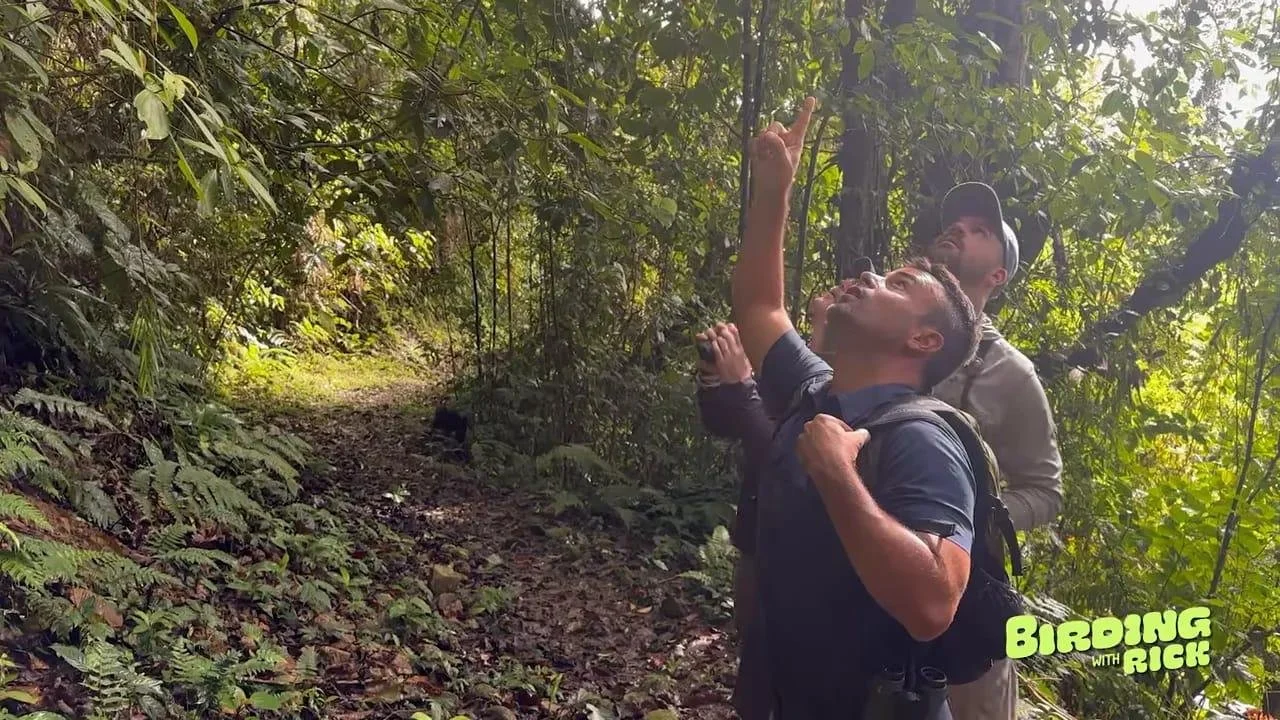
Our guide, Juanjo, helped connect calls, habitats and likely locations. During the quetzal search, guides were spread along the road and communicating with radios. That coordination helped track a bird that could disappear into the hillside in seconds.
Local knowledge also delivered something completely unplanned. We stopped in a town following a report of a Barn Owl. After asking someone in the park, we found two Tropical Screech-Owls sitting together above a playground instead.
Wrong owl. Excellent result.
When comparing guided birding tours, ask questions beyond the target list:
Does the guide know the particular habitats you will visit?
Can the pace accommodate beginners and experienced birders?
How much walking is involved, and are harder outings optional?
Is there room to adapt when weather or recent sightings change the plan?
Birdwatching tours should help you understand what you are encountering, not merely announce names while everyone struggles to locate the bird.
Leave Room for Lodge Birding and Other Wildlife
Some of my favorite moments happened without going anywhere. At El Copal, morning coffee on the balcony came with hummingbirds arriving at flowers and birds becoming active across the grounds.
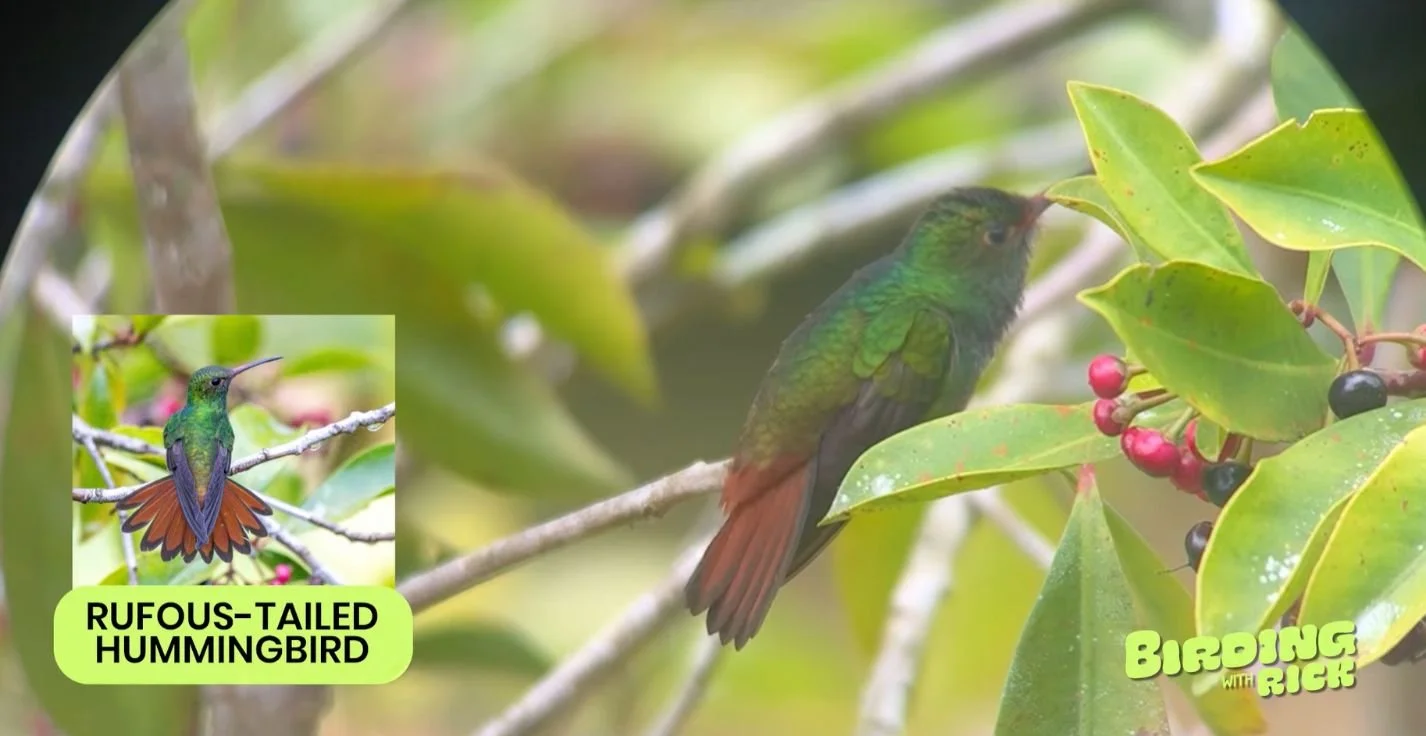
Speckled and Bay-headed Tanagers made it difficult to settle on a favorite. Later, a Rufous-tailed Hummingbird and Tropical Kingbird gave us more reasons to keep birding while lunch was being prepared.
Rest time does not have to mean missing birds. A well-situated lodge lets you slow down while remaining connected to the habitat.
The binoculars also came down for mammals. At Manuel Antonio, we searched for sloths, encountered monkeys and saw a sloth with a baby. Finding an animal concealed among leaves was sometimes only half the challenge. Working out which part was its head took another moment.
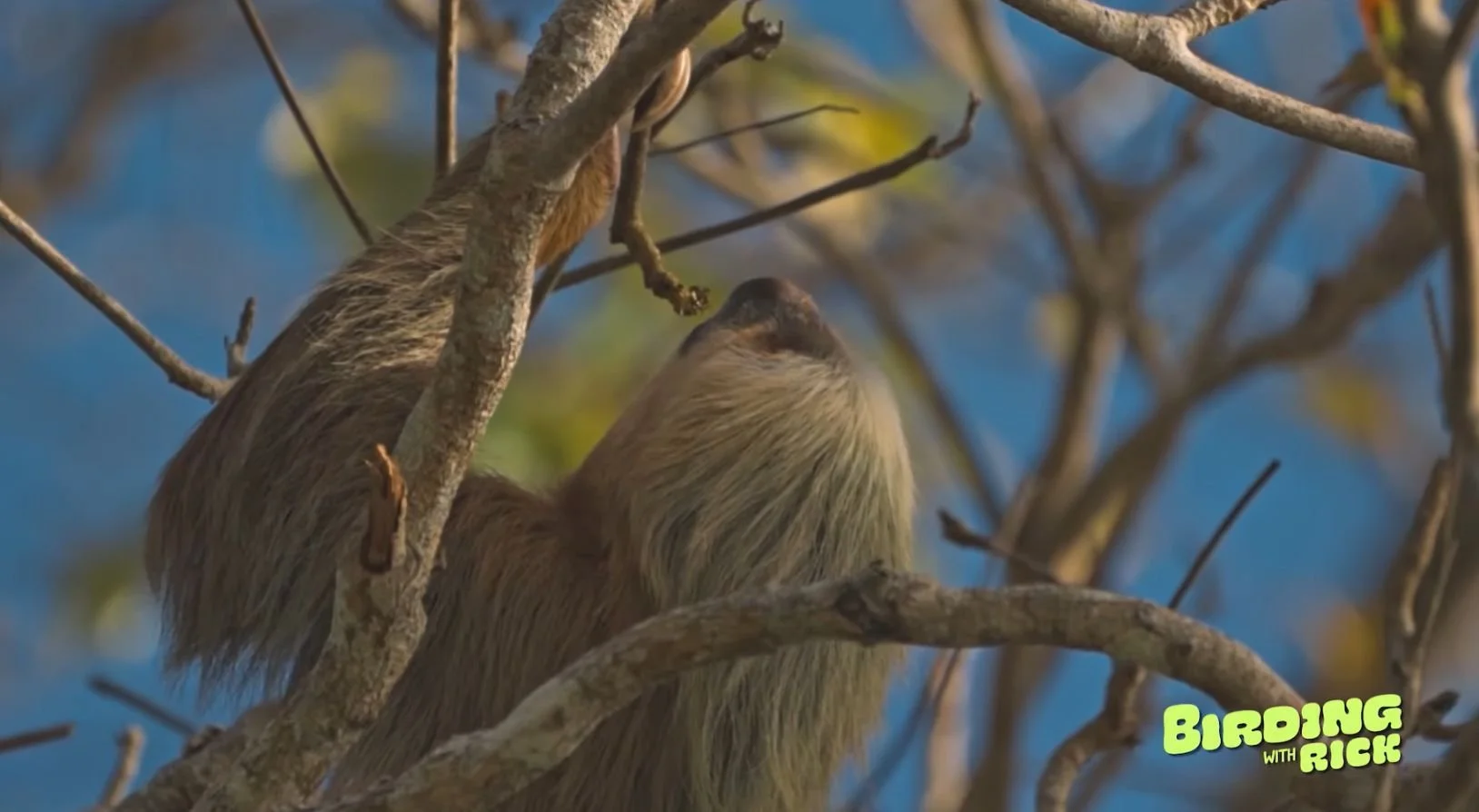
For bird watching vacations shared with people who have different interests, this matters. One person may want hummingbirds, another sloths, another a quiet afternoon. A flexible trip can make space for all three without turning every outing into a compromise.
Prepare for Rain, Altitude and Plans That Change
Birding in Costa Rica can be comfortable and physically demanding on the same trip. Our rainforest trails became wet, while the highlands brought strong winds and fog.
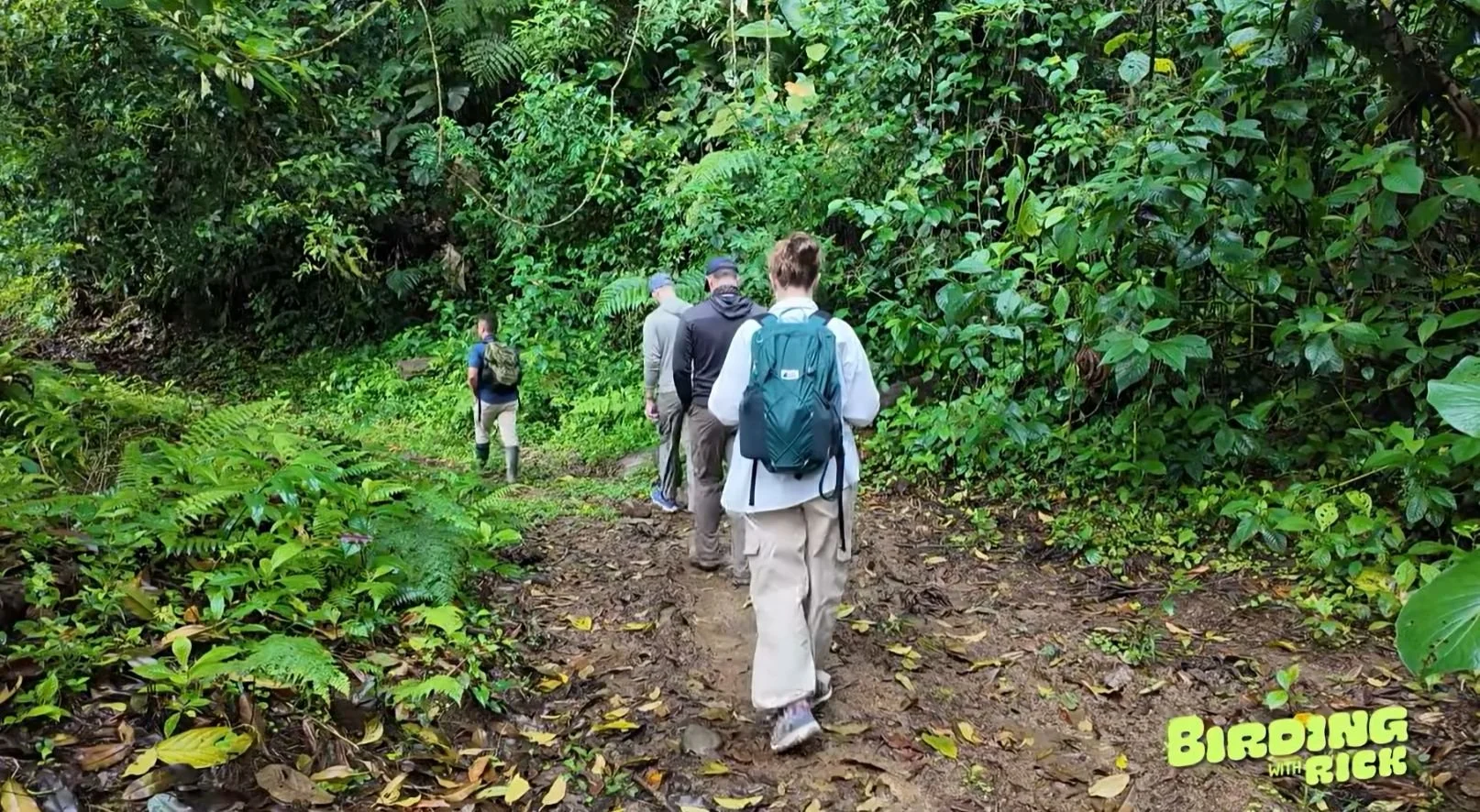
At roughly 3,300 meters, walking uphill felt noticeably harder. An outing described as moderate at lower elevations did not feel moderate to me up there. Ask about altitude, gradients and alternatives before committing to a mountain excursion.
My practical checklist for Costa Rica birding includes:
Accessible binoculars: Keep them ready at lodges and transfer stops.
Rain protection: Prepare for wet trails and protect your optics.
Layers: Mountain conditions can differ sharply from lower elevations.
Suitable footwear: Choose for wet ground and uneven walking.
Your medical essentials: Keep prescribed emergency medication with you, not in your room.
Flexible expectations: Leave space for unsuccessful searches and unexpected finds.
The medical point is personal. A sting triggered a serious allergic reaction during my trip. Sonya administered my EpiPen, emergency services were called, and I received hospital care. If you have a known severe allergy, discuss your travel plan with your clinician and make sure your companions know your emergency plan.
Weather also changed our nighttime birding. One of our three nighttime owl outings came with strong winds and contributed to an unsuccessful search for owls and nightjars. Good guiding cannot override every condition.
For responsible field behavior, the American Birding Association’s birding ethics guidance is worth reviewing. Better views should never come at the expense of the birds.
Choose a Trip That Leaves You Time to Enjoy It
The best birding trips are not necessarily the ones that fill every available hour. Focused mornings, time to recover, and opportunities to explore other wildlife can make birding more enjoyable, not less serious.
That is the approach behind the Costa Rica Cloud Forest Birding Retreat, where morning birding spans Pacific Coast, mangrove, rainforest, cloud forest, and highland habitats, with time built in to rest and enjoy the surroundings.
Whether you travel independently or join a group, start with the habitats, choose a few meaningful targets and leave room for surprises. I came for a quetzal. I would not have wanted to miss everything that happened before it.
Costa Rica Cloud Forest Birding Retreat
November 27–December 9, 2027 | 12 nights, 13 days | $7,795 USD per person, double occupancy
The retreat includes accommodations, all meals, private transportation, park and reserve fees, and local expert guidance, with guided excursions, boat and owl tours, and a $1,000 deposit to secure your spot.
Ready to start planning? Explore the retreat details or contact Rick about upcoming dates and availability.